

Curator Conversations: Mark S. Melville on “Unspeakably Queer”
We sat down with Curatorial’s very own Mark S. Melville, Archivist for the E.O. Hoppé Estate Collection, and curator of the traveling exhibition Unspeakably Queer, to learn more about the historical context in which its photographs were taken, how they were discovered in the archive, and what the exhibition offers for audiences’ comprehension of LGBT+ history.
Working at a time when male homosexuality was illegal and notions of transsexuality were embryonic, photographer E.O. Hoppé was a major ally during he 1920s and '30s, photographing dozens of what we would now think of as gay, lesbian, bisexual and gender-nonconforming individuals with surprising candidness and extraordinary sensitivity. A century after they were made, the portraits in Unspeakably Queer are striking in their modernity and contemporary relevance.
The Unspeakably Queer exhibition is available for booking. The associated catalogue of the same title includes biographies and historical information to accompany every portrait, along with contextual essays, many additional images, and a forward by popular award-winning writer and scholar, Philip Hoare. For exhibition details and booking information, visit our website.

Fig. 1
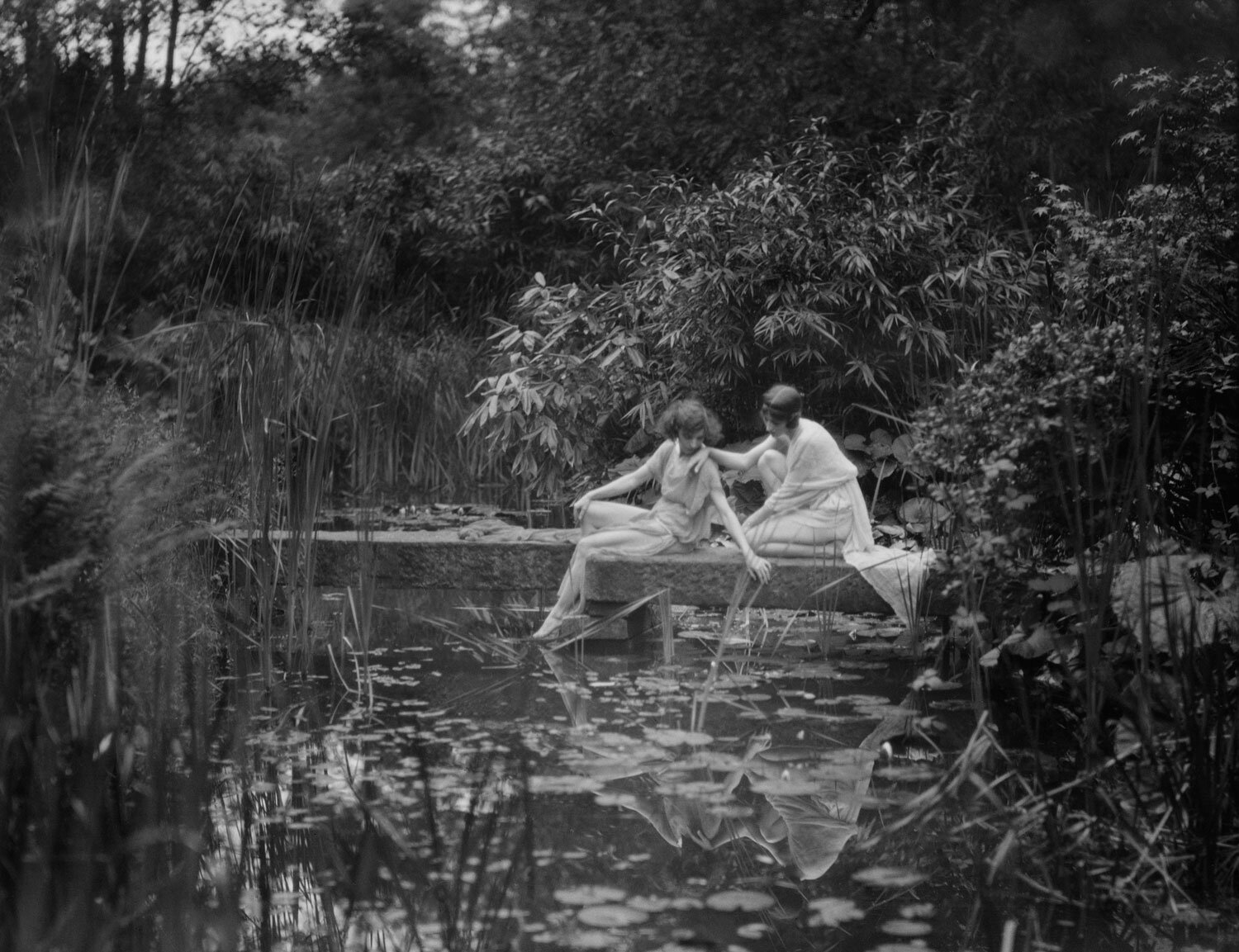
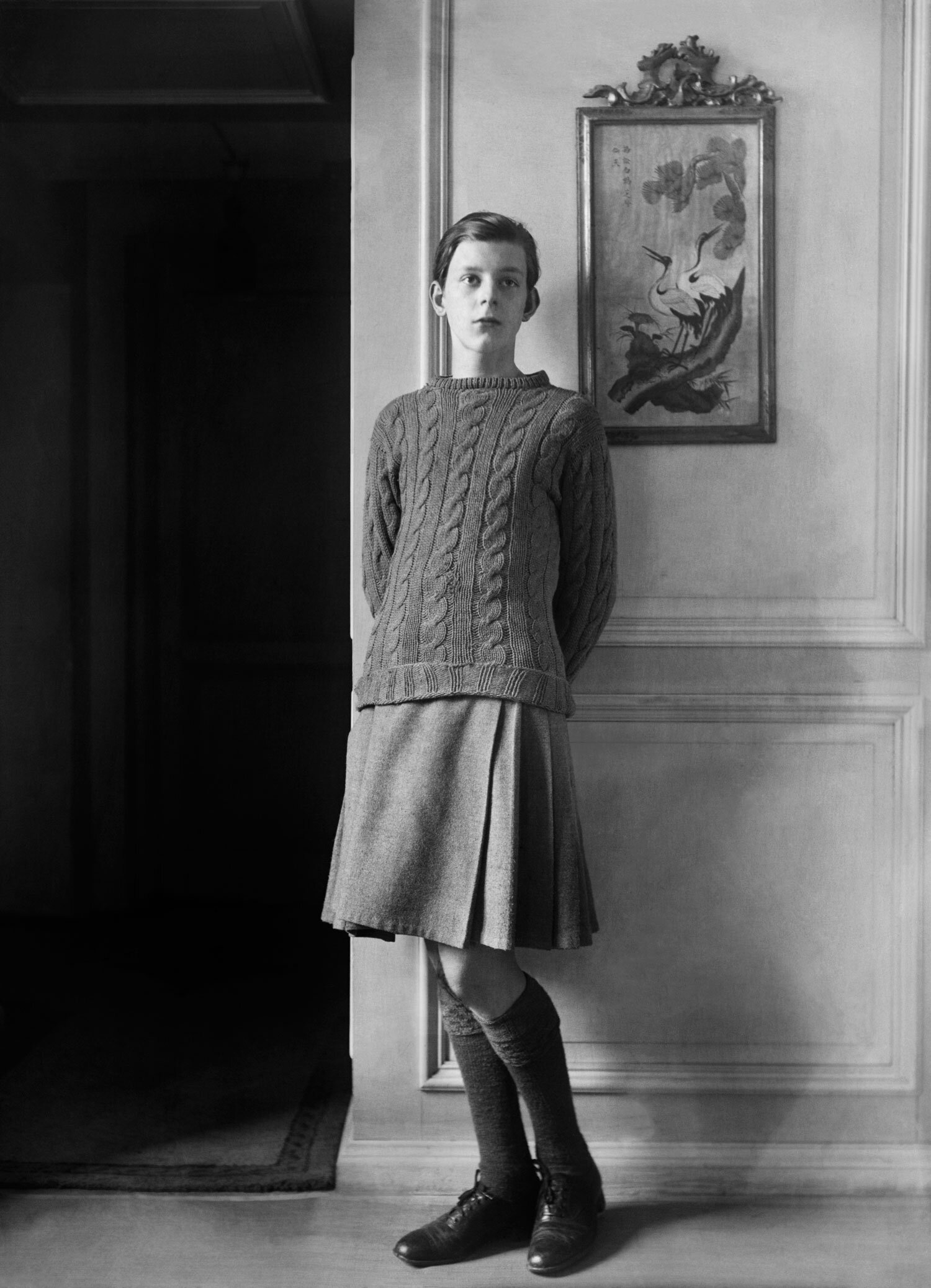
Stephen Tennant, 1922
Courtesy of the E.O. Hoppé Estate Collection, Pasadena, California
Curatorial: Let's start with the underpinnings. How did you come across this selection and what caught your eye initially?
Mark S. Melville (MM): Working in the the E.O. Hoppé Collection, I’m always handling 100 year-old negatives, or am wrangling digital scans of them. Hoppé was incredibly prolific, and we have probably a hundred thousand images he personally created, plus archives of his writings, which were almost as numerous. One of my central jobs is making sure that these assets are effectively maintained, scanned, described in our databases, keyworded, given historic context, and made publicly available.
Some of the archive negatives require special storage treatment because they’re chemically hazardous. Certain types of old film stock can outgas, melt and can be literally explosive. Early on in my job, I had the responsibility to go through almost the entire collection to segregate out the most unstable materials to mitigate the risk to the rest of the collection. In the process I had the opportunity to sift through almost all of Hoppé’s surviving negatives personally.
One day during this pretty overwhelming and smelly process I came across a glass negative of a young man on a swing in a fabulously calculated big straw hat and carefully fanned out, kilted suit (Fig. 1). This “kid,” Stephen Tennant, looked like he was on top of the world, a dandy already while still just a teenager. There were other negatives from the shoot as well, and Tennant had clearly picked a different stylish, usually skirted outfit combo for nearly every shot! I had not been aware of him before, but later learned that Stephen is a hero to one of my favorite film directors, John Waters. Tennant was shamelessly flamboyant from the beginning, but lazy at the same time. He inherited a family fortune from bleach production. Hoppé went to the Tennant’s country mansion in Wiltshire to photograph them all, but Stephen’s portraits were starkly different from those of the rest of the family! I think he was art directing himself.
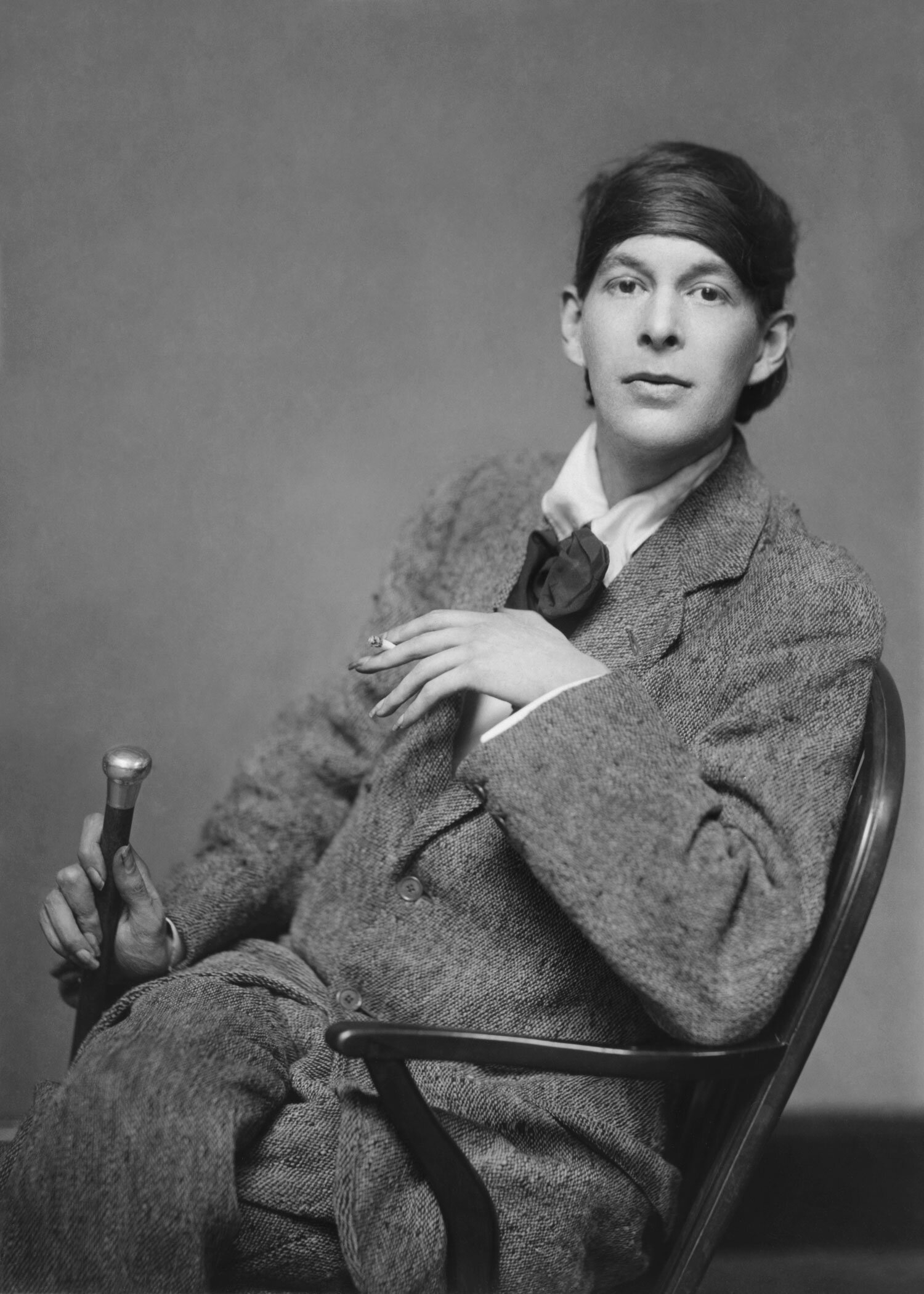
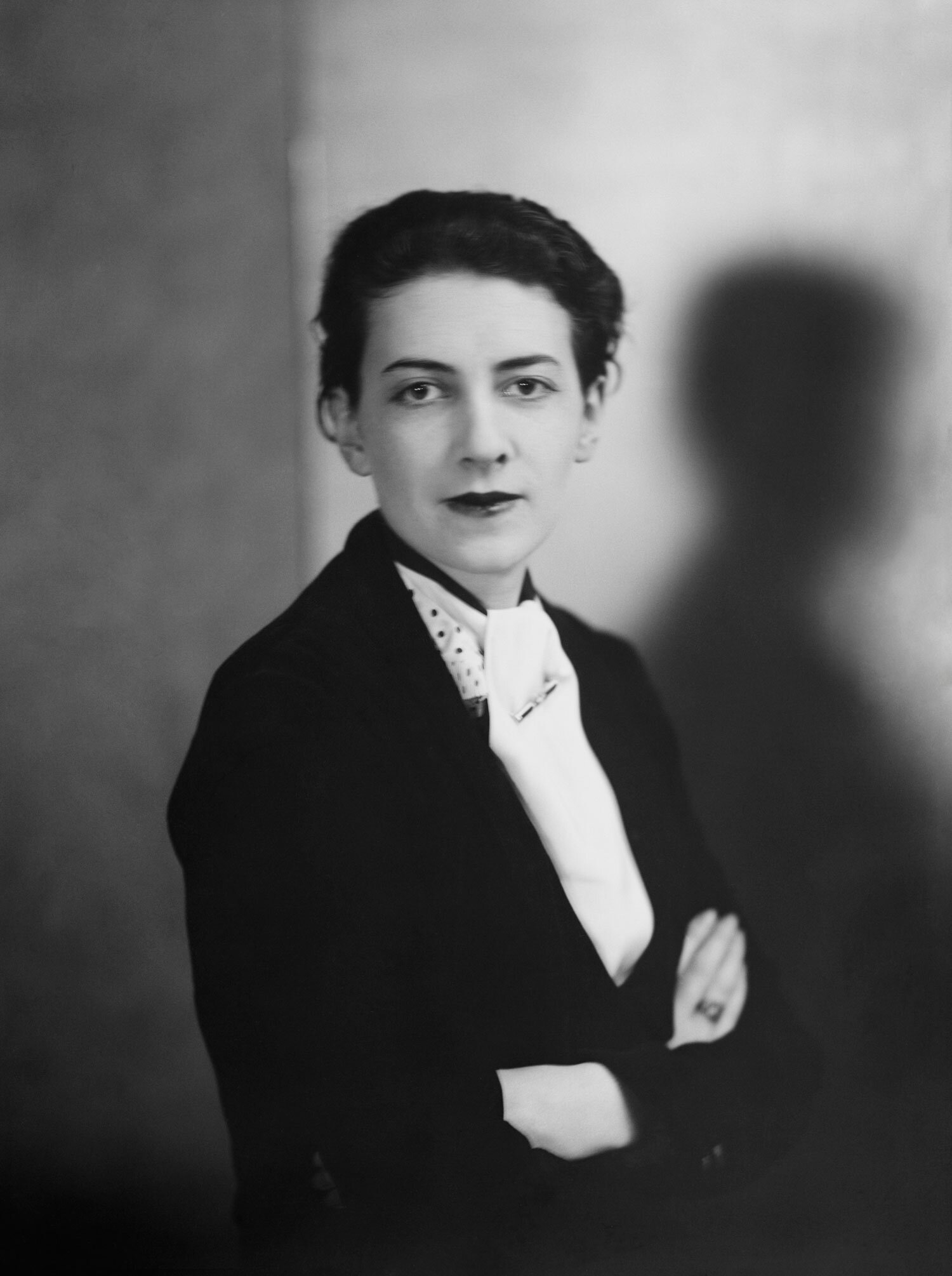
As more and more Hoppé portrait negatives came before me to review, I couldn’t help but notice many other clearly gender-non-conforming people were among them, and the portraits were fantastic, seemingly far before their time. There was the artist Gluck, wearing what would be considered a male suit and haircut, the androgynous sculptor Reneé Sintenis who could go from feminine to masculine in the same sitting, professional drag king Beatrice Lillie smoking flirtily, and illustrator Alan Odle, an eccentric man who never cut his fingernails or his hair, just wrapped it around his head more and more as it grew.
E.O. Hoppé himself was heterosexual and pretty conventional in his own way, but he clearly had no problem with, or judgement of, these people who were pushing at the expectations of gendered style. Instead of spotlighting weirdness, he was showing them at their idiosyncratic best.
These images inspired me into a deep dive to find other queer people in the archive, and in the process it revealed an incredible “who’s who” of the coolest personalities of the time. There were portraits of dozens and dozens and dozens of people who were what we now would call LGBT+, or who were what we might consider straight but who were very relevant to modern queer history. Some of those people are still famous today, some not so much, and they were all photographed with Hoppé’s personal sensitivity and insight.
Curatorial: At the time Hoppé was making these photographs, LGBT people were demonized after a wave of scandals involving "gross indecency," epitomized by Oscar Wilde's widely publicized trial and imprisonment. What was it about Hoppé that made these individuals so entrusting of his ability to photograph them in such an honest light knowing what consequences could lie ahead?
MM: E.O. Hoppé was an artist. From his early years in Munich and Vienna to his adult life in London he was always mingling with creative, bohemian and outrageous people. As part of the research for this project, I discovered handwritten memoir notes where he reminisced about a favorite uncle whom he described extensively and vividly, and it sure evoked the recognizable image of a flamboyant queer man in dress and demeanor. As a child, Hoppé and his sister absolutely adored this uncle, but the rest of the conservative family seemed embarrassed by him, and after he died, they refused to discuss him or why they disapproved of him. I think this shows us perhaps why Hoppé was so accepting of such people later on.
If Hoppé respected a person for their work, he would befriend them and advocate for them, regardless of scandal. One of his very first professional portraits was Maud Allan, whose sexy dances with a severed head, based on Oscar Wilde’s Salomé got her headline attention, and eventually resulted in an ugly public trial, which she lost. Hoppé, however, thought she was absolutely magical and he was fascinated with her thoughts on dance and art. I transcribed his remembrances of her from decades later, and he was clearly still smitten by this woman who was so scandalous that some UK cities banned her outright.
Hoppé was a theatrical producer on the side for a while and befriended actors, designers and impresarios. Also a gallerist, he gave individual exhibitions in his own home to at least seven known queer artists that I have counted so far. The exhibitions were smash successes. The queen would attend! The art would sell out!
Hoppé was also a writer, so he understood the more solitary passions of literary figures, including the queer writers, women and men alike. He was able to draw even those sorts of people out of their shells and present their true personality in a photo.
As a queer person, I think we naturally gravitate to people who genuinely “get us.” When you’re marginalized, you develop a sense of threats and safe harbors, and Hoppé was a clear advocate of the unconventional. He prided himself on revealing personalities rather than simply flattering them, and for almost all the people in Unspeakably Queer, I think Hoppé consistently took the best, most expressive photos of them in their lives. They clearly felt safe with him and free to be their authentic selves.
Curatorial: Why the exhibition title, “Unspeakably Queer”?
MM: The word “queer" is a term that the community has reclaimed from being used for decades as a slur. It was commonly used back in Hoppé’s time and before in the sense of being slightly ‘other,’ apart from the norm, not necessarily in a totally bad way, but just…different from most, as in, “what a queer chap." I imagine them saying it with just a slight tilt of the head.
Our Executive Director of Exhibitions, Phillip Prodger, proposed the title “Unspeakably Queer,” which is perfect for this era where the tragedy of Oscar Wilde and “the love that dare not speak its name” was always in the background. There was a constant, legitimate atmosphere of fear for these people. Even if you were a rich celebrity, you could be brought down if certain people discovered your truth. As we show in the exhibition and its book, some people paid a fatal price for that repression and enforced closeting.
Curatorial: The language used to describe the lifestyles of queer people was very limited during the early decades of the 20th century; "gross indecency," "sodomy," and "sexual degeneracy," to name a few choice terminologies. Flash forward to the current social climate where identifying pronouns, gender fluid-awareness and queer culture are becoming more readily recognized and used. In your research with the Hoppé Estate Collection, what did you find most interesting about Hoppé's approach to connecting with these queer figures of the early 20th century given the limited knowledge on the subject and study of sexology at the time?

Fig. 2
Gluck, 1924
Courtesy of the E.O. Hoppé Estate Collection, Pasadena, California
MM: Hoppé, as in so many things, was on the cutting edge here with the emergence of identity politics. One of his friends was Havelock Ellis, who made the first scientific studies of homosexuality and attempted some of the first labels, like “inversion” for same-sex attraction and “eonism” for what we call transsexuality today. Those labels didn’t stick, but it was a start.
“Queer” and even “gay” were already in the vernacular lexicon at the time but when such topics are “unspeakable” there is never a consensus on what people want to be called, or what they shouldn’t be called. The concept of sexual minorities as a community didn’t exist, and really couldn’t until much later, the late 1960s. People operated in small personal bubbles when they had the luxury of that. We are still trying to figure out appropriate ways to describe and name people, their identities and relationships. It’s a messy process, always changing with the times.
The artist Gluck is a perfect example of someone whose insistence on the right titles and pronouns is totally relevant to contemporary discourse (Fig. 2). Born female with the name Hannah Gluckstein, Gluck didn’t identify that way. They wanted to be called by their personally chosen name alone, Gluck, with “no prefix, suffix or [quotation marks].” When an art society called her “Miss Gluck” on their letterhead, Gluck resigned from it! Today, Gluck could have chosen preferred pronouns and published them in social media profiles.
Curatorial: The portraits in “Unspeakably Queer” reveal how different individuals manifested their public expressions of gender and sexuality at a time when doing so commonly resulted in public shaming, imprisonment, and sometimes death. How does sharing the lesser known stories of these prominent 20th-century icons improve our understanding of LGBTQ+ history and its impact?
MM: Many Queer people grow up without a sense of history, and as people come of age and try to discover themselves, most don’t have any context or sense of heritage about their otherness. The topic is often forbidden in schools. Queer people in history are almost invisible in the official mainstream accounts until you do your own digging. There is often a moment when you realize, “hey, wait, they never said anything about this in class,” but it becomes obvious that this person’s queerness and difference is clearly fundamental to their art and their achievements.
Just as people generally, most of us are hungry to find out about our heritage, those who were like us who came before, who blazed the trails for us. There are so many lost stories of queer heroes you can cheer and queer villains you can boo, and everybody in-between, living complex lives. Cultural heritage institutions are finally realizing that these histories are sitting in established collections, just waiting to be uncovered and consumed by eager students of any age.

Mark S. Melville manages the vast digital and physical archive of the E.O. Hoppé Estate Collection, which contains an uncountable volume of images, camera negatives, documents, manuscripts and objects. He curated Unspeakably Queer, which showcases portraits and life stories of early-twentieth century LGBT+ personalities, and authored its accompanying book. Melville holds a BA, English from University of Utah, Salt Lake City, and Archives and Digital Collections Certification from Pasadena City College, Pasadena.